Protect Your Cables from Pets: Guide for Cat and Dog Owners
Protect Your Cables from Pets: Guide for Cat and Dog Owners
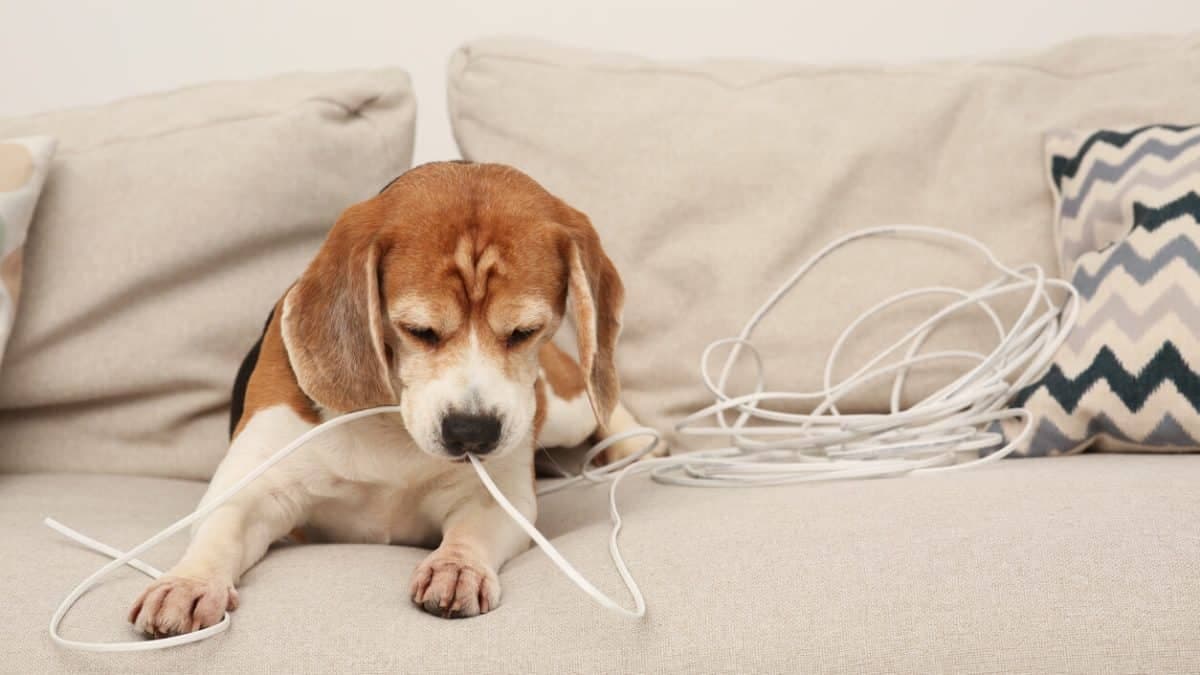
You turn around for a second, and then you hear that characteristic "chew-chew" sound - your cat or dog is chewing on yet another cable. If you're a pet owner, you probably know the frustration. And the worry.
Because it's not just about damaged cables and expensive replacements. It's about the safety of your beloved pet.
Fortunately, there are effective ways to protect both your cables and your pet - without having to rearrange your entire home.
Why Do Pets Chew on Cables?
Before we get to the solutions, it's important to understand why your pet does it:
Cats:
- Hunting instinct: Dangling cables look like toys or prey
- Teething: Kittens chew to relieve discomfort when getting new teeth
- Boredom: A lonely cat finds its own entertainment
- Texture: Some cats like the feeling of rubber or plastic
Dogs:
- Teething: Especially puppies chew on EVERYTHING when getting new teeth
- Anxiety: Separation anxiety can lead to destructive behavior
- Boredom: Lack of exercise and mental stimulation
- Curiosity: Young dogs explore the world with their mouth
The Dangers of Cable Chewing
It's not just annoying - it's actually dangerous:
For your pet:
- Electric shock: Can be fatal, especially for small pets
- Burns: On mouth and paws
- Dental damage: Broken teeth and gum inflammation
- Internal damage: If they swallow cable pieces it can block intestines
For your home:
- Short circuit: Risk of fire
- Damaged electronics: Expensive replacements
- Electrical faults: Potentially dangerous for the entire household
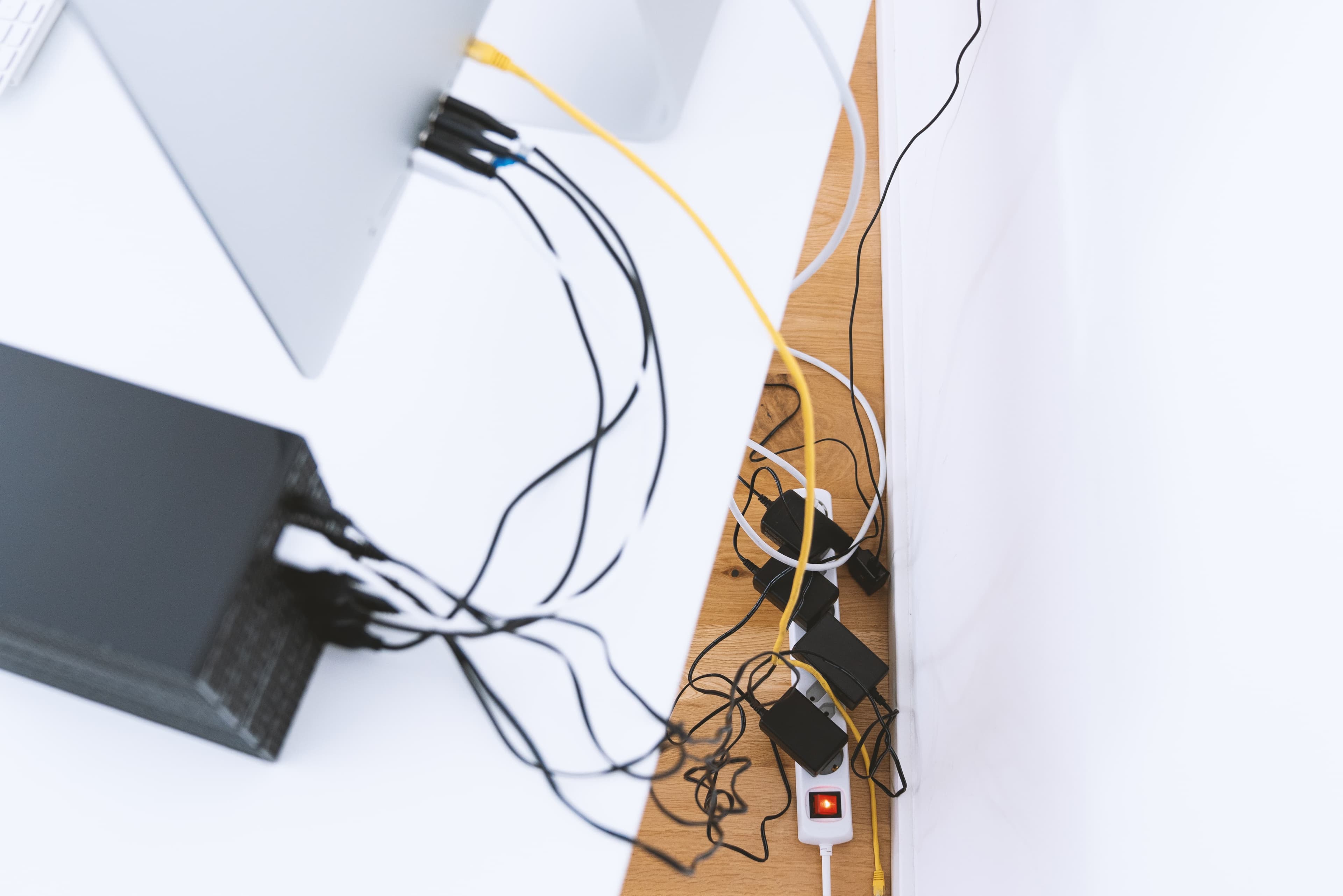
Loose cables that are attractive to pets
Solution 1: Physical Protection with Cable Sleeves
The most effective solution is to make cables physically inaccessible:
Textile Cable Sleeves - The Ideal Solution
Staywired cable sleeves are perfect for pet homes because:
- Robust textile: Much harder to bite through than plastic
- No sharp edges: Safe even if they play with them
- Tight-fitting: Cables stay securely inside, even when pulled
- Machine washable: If the cat drools on them, they can be easily washed
- Flexible: Follows floors and walls naturally, less tempting than loose cables
How to use them:
- Bundle all loose cables in one cable sleeve
- Secure the cable sleeve to the floor or wall with clips
- Make sure no ends stick out (they're most tempting)
- Use shorter cables where possible to minimize excess
Solution 2: Make Cables Inaccessible
If you can't hide all cables in cable sleeves:
Under furniture:
- Run cables along the wall behind furniture
- Use double-sided clips to secure them to the underside of tables
- Hide power outlets behind sofas or cabinets
Up on the wall:
- Mount cables high up where pets can't reach
- Use cable channels along door frames and ceiling
- For TV cables: run them inside the wall if possible
Built-in protection:
- Use furniture with built-in cable management
- Consider wireless alternatives where possible
- Use wireless chargers for phones
Solution 3: Deterrents
Supplement physical protection with deterrent methods:
Bitter spray:
- Buy pet-safe bitter spray at the pet store
- Spray it on cables (test first on a small area)
- Repeat regularly as the effect wears off
- Important: Turn off power before spraying
Citrus scent:
- Many cats hate the smell of citrus
- Rub orange peel along cables (again, power off first)
- Place citrus peel strategically near cables
Aluminum foil:
- Cats hate the sound and feel of foil
- Wrap cables in foil or place foil in front of them
- Temporary solution while you find permanent protection
Solution 4: Provide Alternatives
Attack the problem at the root - give your pet something else to focus on:
For cats:
- Toys: Many interactive toys, especially rope and feathers
- Catnip: Distract with catnip toys
- Scratching posts: A busy cat is a cat that doesn't chew cables
- Window perches: Give them entertainment from outside
For dogs:
- Chew toys: Robust chew toys that are better than cables
- Kong toys: Fill with treats for long-lasting entertainment
- Exercise: A tired dog is a good dog - plenty of walks
- Training: Teach "leave it" command consistently
Solution 5: Supervision and Training
Prevention is better than cure:
Active supervision:
- Keep an eye on your pet in cable-heavy areas
- Intervene immediately if they go after cables
- Praise them when they ignore cables
Training:
- "Leave it" command: Essential for dog owners
- Redirection: When they go after cables, immediately give them a toy
- Positive reinforcement: Reward when they listen
- Consistency: Everyone in the family must follow the same rules
For kittens and puppies:
- Extra supervision during the teething phase
- Ensure plenty of legal chewing options
- Don't get angry - redirect instead
Emergency: What to Do if Your Pet Gets Shocked?
If your pet bites into a live cable:
- DON'T TOUCH THEM with bare hands
- Turn off power at the main circuit breaker
- Move them away from the cable with a non-conductive object (wood, plastic)
- Check breathing and pulse
- CALL THE VET IMMEDIATELY - even if they seem okay
Signs of electric shock:
- Burns in the mouth
- Drooling
- Breathing difficulties
- Loss of consciousness
- Seizures
Cable-Proofing Room by Room
Living room/TV area:
- Bundle all TV cables in one large cable sleeve
- Hide PlayStation/Xbox cables behind furniture
- Elevate streaming boxes so cables don't dangle
Home office:
- Use cable sleeve from desk to outlet
- Secure laptop charger under desk when not in use
- Keep desktop tidy so cables don't tempt
Bedroom:
- Phone charger: use wireless or put cable inside nightstand
- Lamp cables: run them behind the nightstand
- Consider bed speakers instead of headphone wires
Kitchen:
- Small appliances: store them in cabinets when not in use
- Coffee maker, toaster: use cable sleeve along back edge of counter
- Charging stations: place them on high shelves
Cable Management for Multi-Pet Homes
Have multiple pets? Extra challenges require extra solutions:
- Competition: More animals = more chaos, even more important with good protection
- Different needs: Young and old animals have different behaviors
- Zones: Create pet-free zones at critical areas
- Baby gates: Block access to rooms with lots of electronics
Conclusion
Protecting your cables from pets is about three things:
- ✅ Physical protection: Use robust textile cable sleeves
- ✅ Environment change: Remove temptations, add alternatives
- ✅ Training and supervision: Teach your pet what's okay
With Staywired cable sleeves you get a solution that both protects your cables AND is safe for your pet. Robust enough to withstand teeth and claws, but soft and safe if they should get hold of it anyway.
Remember: A brief moment of prevention is better than a vet bill - or worse, losing a beloved pet to an electric shock.
Have questions about cable protection in your pet home? Contact us at hello@staywired.dk - we'll help you find the right solution.